Mango gets the magazine covers. Mango gets the festivals, the GI tags, the seasonal cover stories. Pink guava — Psidium guajava, the rose-fleshed cousin of the everyday white guava — gets a fraction of the same attention, despite ripening across India for nearly half the year and offering a flavour that is, by some measures, more complex than any mango in the basket.
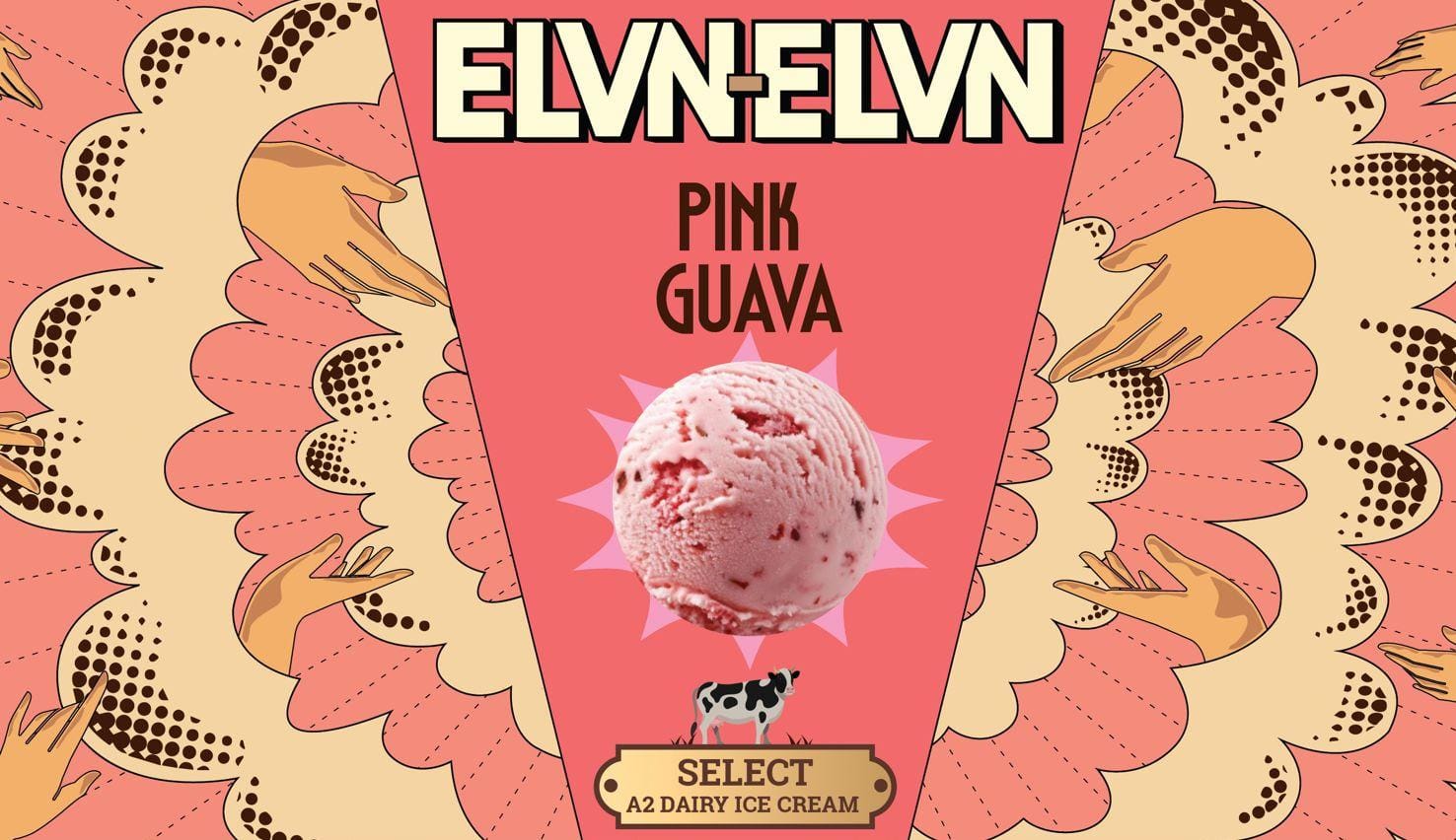
ELVN-ELVN‘s Pink Guava, one of the flavours in the brand’s SELECT (A2 dairy) range, is a small attempt to correct the imbalance.
Why pink guava
The pink-fleshed varieties — Lalit, the pink-pulp Allahabad mutations, the Apple Color cultivars — concentrate higher levels of lycopene, the same carotenoid that gives tomatoes and watermelon their colour. The fruit is nutritionally dense: more vitamin C per gram than an orange, a measurable amount of dietary fibre, and a glycemic index lower than most tropical fruit. It grows across Uttar Pradesh, Maharashtra, Karnataka, Tamil Nadu and Bihar, with a harvest window that stretches from late winter into early summer.
Despite that, pink guava in India is mostly known as juice. Tetrapack juice. Concentrate. The fresh fruit shows up at fruit carts; it rarely shows up on dessert menus, and almost never on a back-of-pack ingredient list.
What it tastes like as ice cream
Pink guava is harder to handle than mango. The seeds — small, hard, evenly distributed through the pulp — have to be removed without bruising the surrounding flesh. The flavour is delicate enough that it can be flattened by heat, by sugar, or by sitting too long. The colour is unstable: oxidation will turn a vivid rose flesh into a pale brown within hours.
Done well, the result is a frozen dessert that tastes like the fruit and very little else. The aroma is floral and slightly musky, with the rose-petal top note that gives the cultivar its name. The sweetness is restrained — guava sugars are lower than mango sugars to start with, and ELVN-ELVN sweetens with whole dates, allulose and natural monk fruit rather than refined sugar. The colour is the natural pale pink of the ripe fruit, never tinted.
Why this flavour, in this range
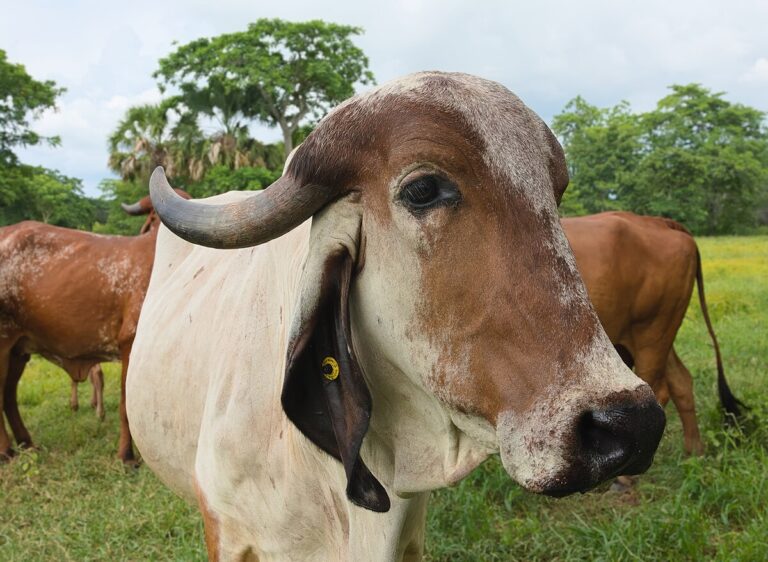
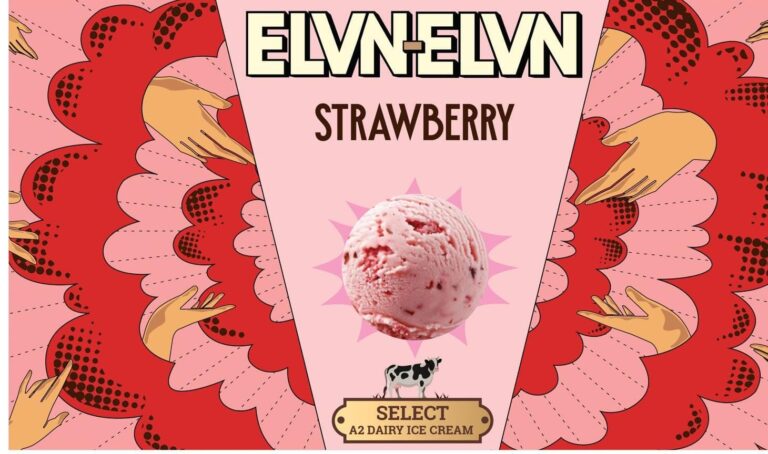
The SELECT range is built on A2 Desi cow milk and A2 fresh cream from indigenous-breed farms — Strawberry, Pink Guava, Choco Velvet, Royal Alphonso. The shared logic is that the dairy base is honest enough that the fruit, the cocoa, or the mango has to be honest too. There is no industrial stabiliser to mask a thin pulp, no synthetic flavouring to amplify a weak note, no colour to fake a ripeness that was not there.
Pink guava is the flavour in the SELECT line that is hardest to do well, and the easiest to do badly. The fruit’s quietness — the very thing that makes it underrated — is also what makes it exposed.
Why pay attention to the fruit at all
India produces roughly four million tonnes of guava a year. It is the fourth most-cultivated fruit in the country after mango, banana and citrus. Most of it is exported as pulp or sold as juice; very little of it ends up in premium dessert. A single-cultivar scoop is a small act of attention. It is also a small bet that the next decade of Indian dessert will look more like the next decade of Indian coffee — single-origin, traceable, and proud of the cultivar on the label.