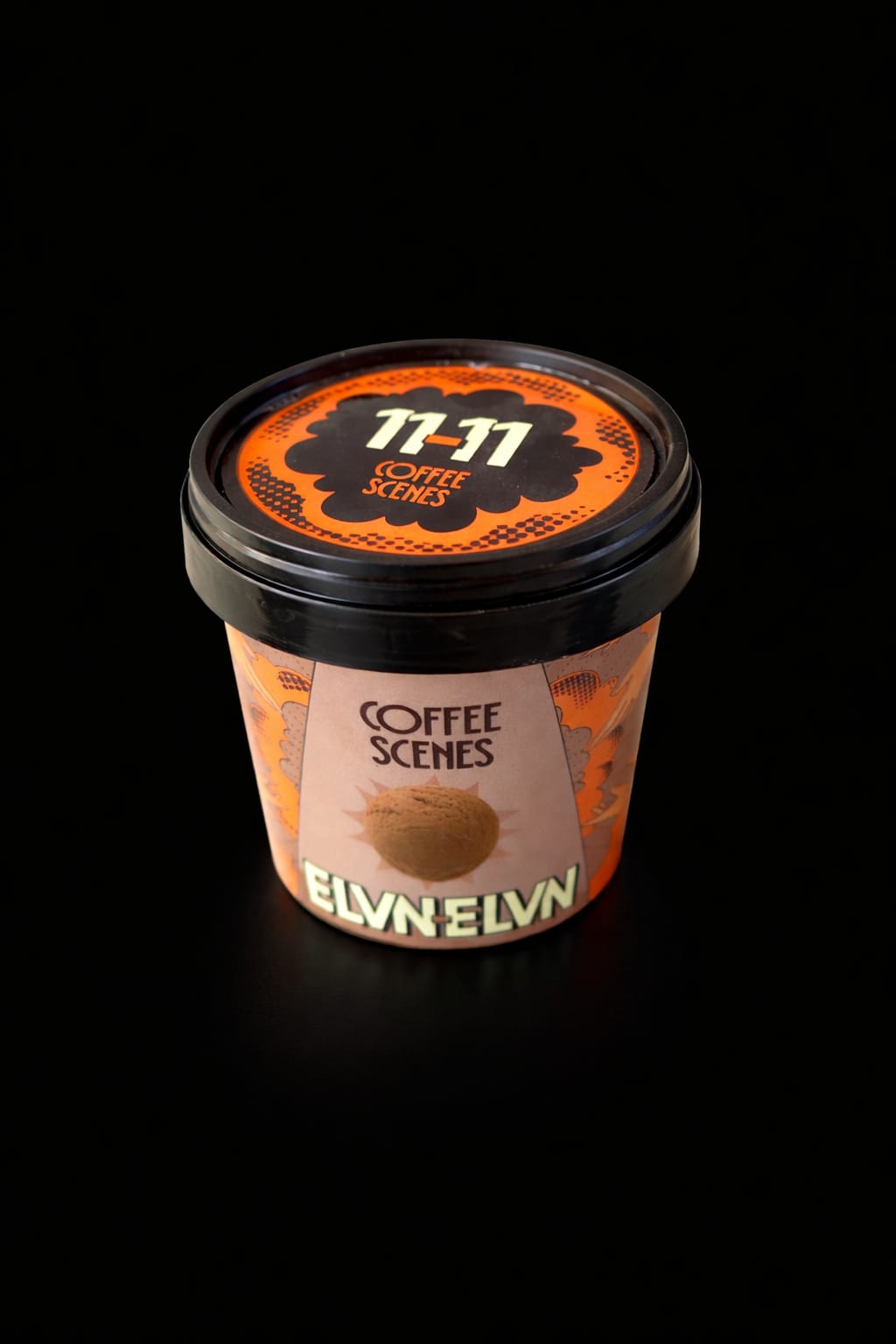
Most coffee ice cream in India tastes vaguely of coffee in the way most “vanilla” ice cream tastes vaguely of vanilla. There is a flavouring agent, often imported, often labelled natural identical. There is a hint of bitterness. There is a brown colour. The actual coffee — the bean, the origin, the roast, the grind — is rarely the point.
Coffee Scenes, one of six flavours in ELVN-ELVN‘s MILLET range, takes the question seriously. The ice cream is built on real, freshly brewed Indian coffee, not concentrate or extract. The brew is steeped into the millet-led plant-milk base, the same base used across the MILLET range — coconut + jowar + ragi milks (with millets the largest single component), a small percentage of natural deodorised coconut oil for body, sweetened with whole dates, allulose and natural monk fruit, churned without industrial stabilisers or emulsifiers. The result tastes more like a slow, cold filter coffee than a coffee-flavoured candy.
India grows world-class coffee. Almost no one tells dessert about it.
India is the seventh-largest coffee producer in the world. The bulk of it grows in three regions — Chikmagalur and Coorg in Karnataka, the Wayanad belt in Kerala, and the Pulneys in Tamil Nadu. Indian arabica is shade-grown, often interplanted with cardamom and pepper, and tends to carry a heavier body and lower acidity than its Latin American counterparts. Indian Monsoon Malabar, deliberately exposed to the south-west monsoon during processing, has its own protected GI status.
The third-wave coffee renaissance of the last decade has spent years telling the story of Indian beans to Indian drinkers, with single-estate releases, washed and natural processing, traceable lots. Dessert has mostly missed the story. A coffee ice cream made with imported instant or with synthetic coffee flavouring is still the industry default.
Why a millet-led plant-milk base
Coffee on dairy is well-trodden. Coffee on a plant-milk blend in which Indian millets lead is not. The unsweetened, slightly cereal note of jowar and ragi turns out to be a surprisingly good carrier for a dark roast — it does what oat milk does in a flat white, but with more grain character. The natural deodorised coconut oil contributes body without putting coconut on the palate, so the brew does not get masked. The fibre and starches of the base also resist the iciness that low-fat coffee ice creams tend to develop, which is part of why the recipe can leave out gums and emulsifiers entirely.
For drinkers who avoid dairy — for ethical, dietary or digestive reasons — a vegan coffee ice cream that does not lean on coconut for either fat or flavour has been hard to find in India. Coffee Scenes is engineered to fill exactly that gap.
What is on the back of the pack
The label reads, in order: vegan plant-milk blend (coconut milk, jowar millet milk, ragi millet milk; 64% combined), natural deodorised coconut oil, dates, brown rice protein, natural flavour extract (coffee), unmodified plant starches, polydextrose, inulin, monk fruit extract, allulose, pink salt. No INS-coded stabilisers. No INS-coded emulsifiers. No nature-identical or artificial flavour compounds. The brew is real Indian arabica, roasted to a medium-dark profile that carries enough body to survive the freezing process without losing aroma.
The brand calls the range MILLET because the grain is the headline. With Coffee Scenes, the bean is a quiet co-headline — and a small argument that Indian coffee deserves more than supporting roles in its own country’s desserts.